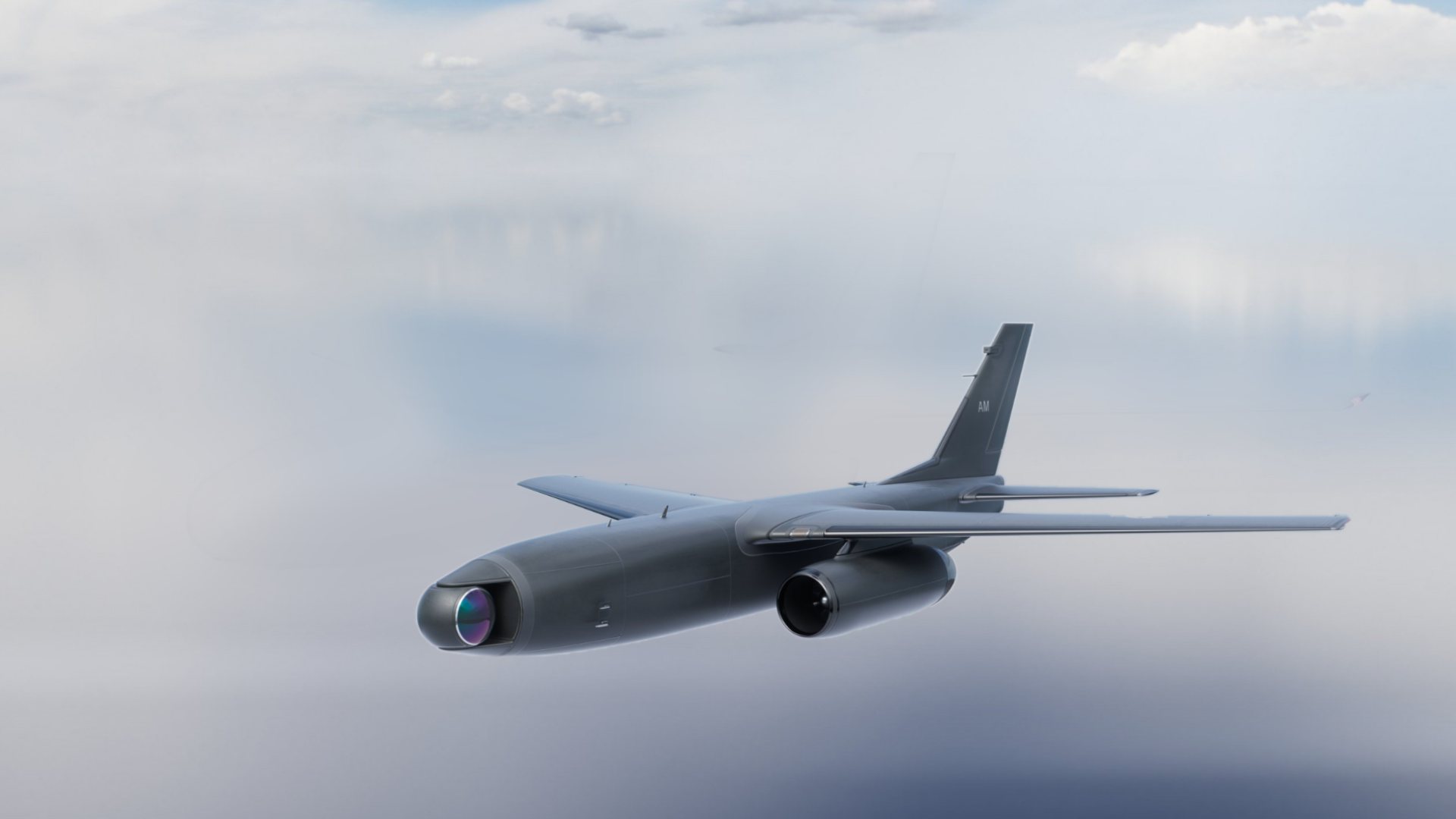
The plane lasers have
been waiting for.
An aircraft with power enough to fire light, not throw metal. It flies by 2028.
Air defense is going electric.
Drones now come by the hundred, and each costs a fraction of the missile sent to stop it. A laser stops one for the price of a little fuel.
Attack planner
Refuel to reload.
The laser’s ammunition is the plane’s fuel. Set up an attack and see what each stop costs.
Fuel to stop one drone
16 of 16 stopped, about 11 seconds each
948 drones launched at one country in a single day. March 2026. Each cost $20,000–50,000 to build.†
What it costs to stop all 948.
Each dot is $5 million. One interceptor for each drone.‡
Patriot missiles$4 million each
$3.8billion
SM-2 missiles$2.1 million each
$2.0billion
Drone interceptors$100,000 or more each
$95million or more
Astro’s laser$0.55 of fuel each
$521
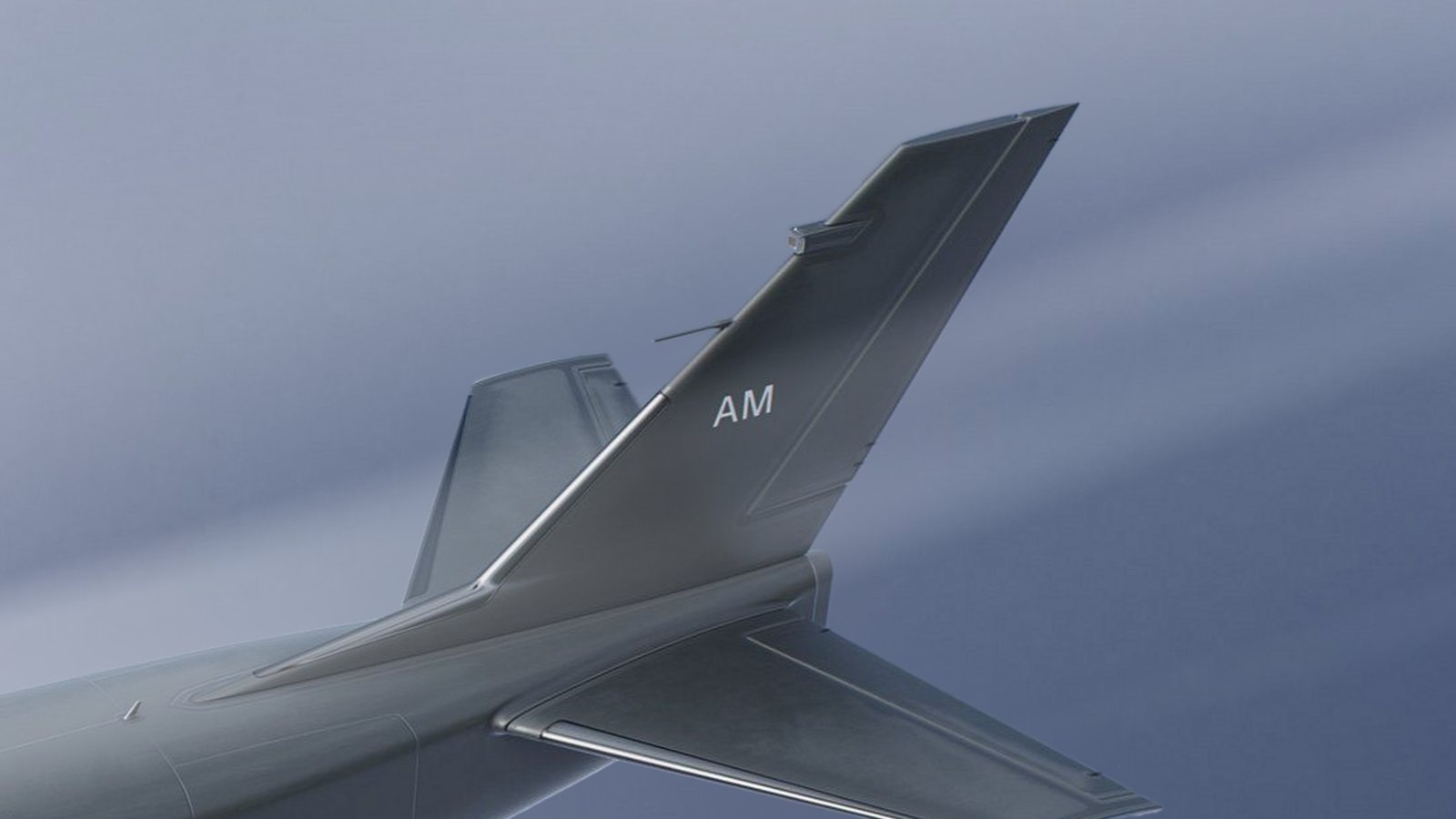
The air is the hard part.
An airborne laser first shot down missiles in 1983.† It took a whole four-engine jet to carry it. Today lasers work on the ground, and they’re going to sea. In the air, a laser needs more power and cooling than today’s aircraft can spare. Ours has both. And once a plane has power to spare, the laser is only the first thing it can do.
Three pieces, one aircraft.
- The laserAlready in service on the ground, and going to sea in 2027.†In service
- The powerOur engine makes the electricity. It is built and running on our test stand.Running
- The coolingAbout two-thirds of a laser’s power ends up as heat. Power and cooling get ready to fly together.Next
2028
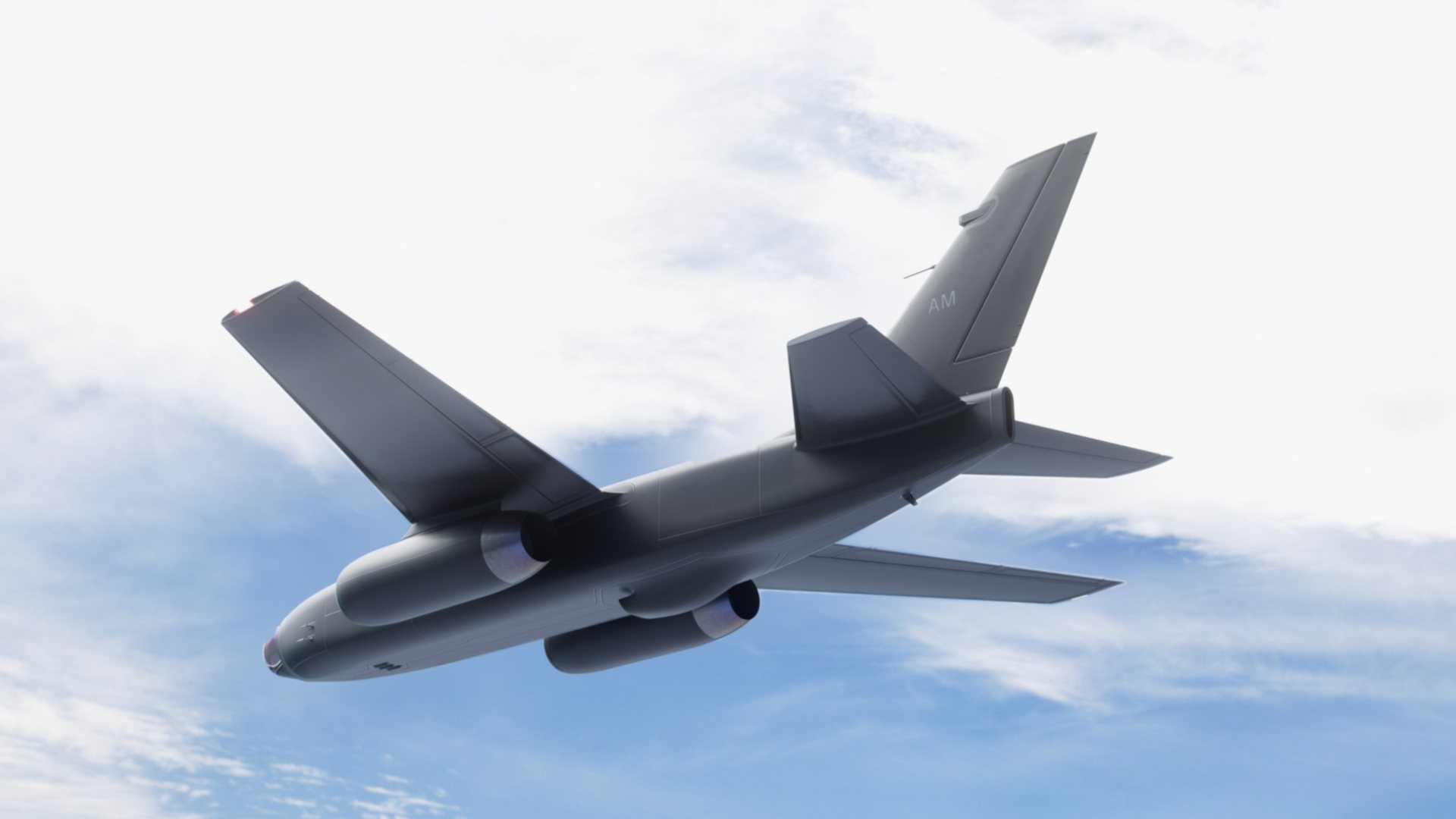
Astro’s laser plane takes off
Request
a briefing.
Tell us what you protect. We’ll start from the attack you just set up.
Or write to airpower@